Spring 2026
Nikki Evans

It started with a long-standing problem: The vinyl tent cabins at Sedgwick Reserve were a favorite location for students and for mice. Sedgwick’s tent cabins have real beds, a desk, and are tall enough to walk around in, making them a good choice for nervous first-time campers and people who are unable to sleep on the floor in a standard tent. They are also enclosed from the wind and sun with ample places for wandering mice to seek cover. And so, for many years, every time someone booked one of these cabins, Sedgwick staff would don their masks and gloves (to protect against hantavirus) and scrub away thick layers of mouse excrement from the floors and furniture that could form in a matter of days. There needed to be a better way.
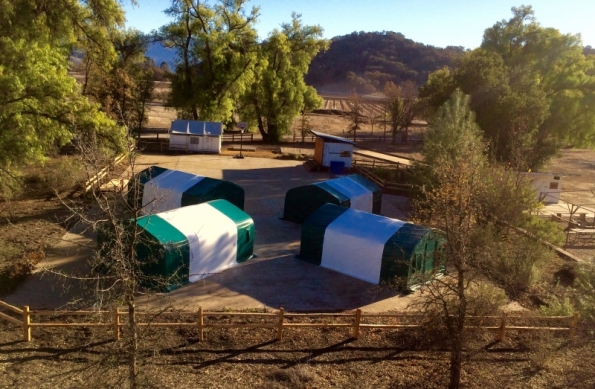

For years, solutions were discussed; put them on raised platforms, set more traps, remove the tent cabins altogether and fundraise for a new structure. Sedgwick Reserve does not use rodenticides due to its effect on wildlife and ecosystems and so this was never on the table. One day, we presented our tent cabin problem to the docents and asked for ideas. Some savvy minds were keen to help. The docents largely self-organized, with Tom Juarez at the head. They borrowed a design from Mark Stromberg and Feynner Arias, UC Reserve Staff who came up with the design and tested it. They also drew from their varied backgrounds including engineering, construction, and project management to develop Sedgwick’s solution, a sheet metal barrier that would extend around the entire perimeter of the tent cabin area. The proposed barrier would be a mere 12-inches tall.


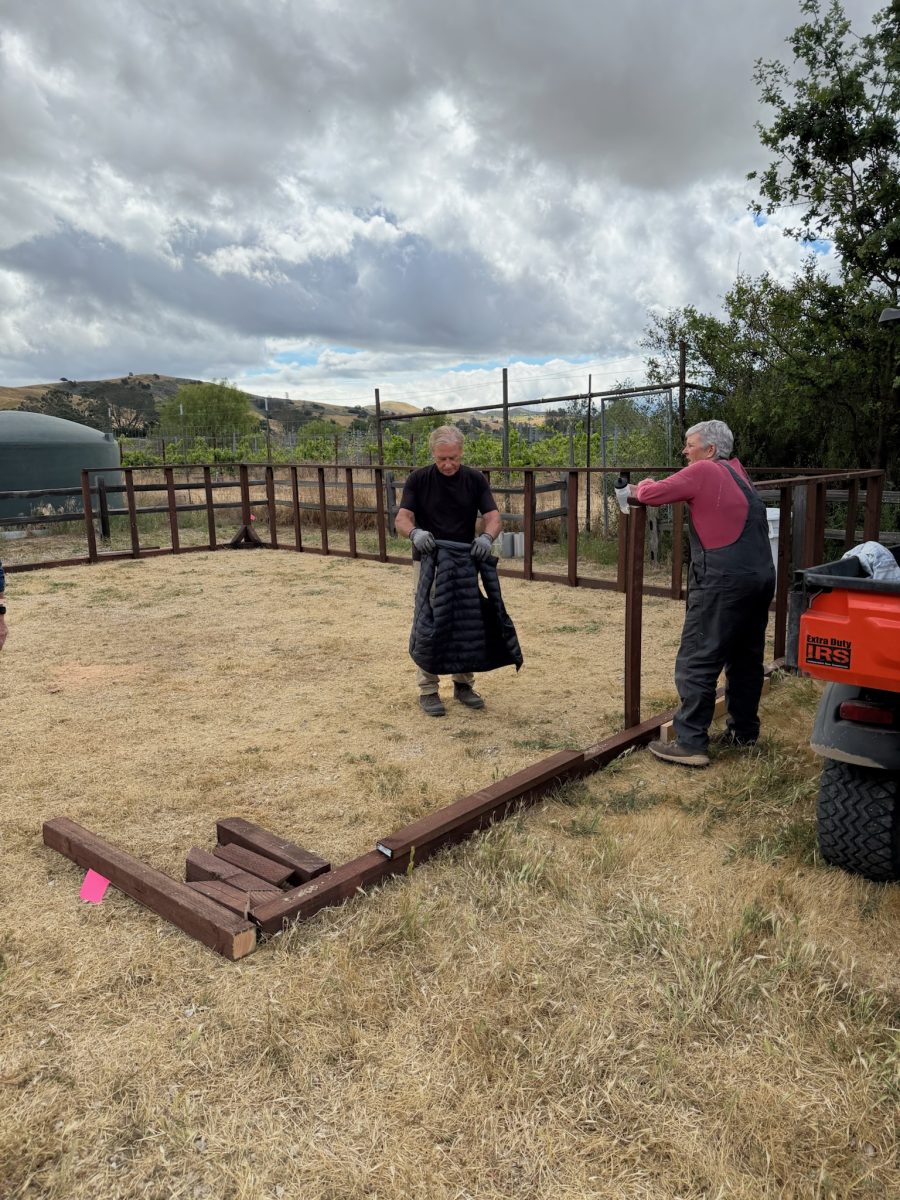

Gallery images courtesy of Lars Rabbe
‘But mice can jump!’
Over the weeks of construction, a lively debate ensued. Everyone became an armchair mouse biologist and discussions around mouse motivation and risk-taking led to several conclusions: A mouse will not be motivated to ascend the slippery surface of sheet metal if it does not smell like food on the other side, and a mouse will be unlikely to jump over a solid barrier where they cannot not see the other side for fear of unobservable threats. As the project was completed, these ideas were proven correct. The mice are no longer in the tent cabins! Energized by their success, the team got to work creating perimeters for Sedgwick staff vehicles, air conditioning units, and key areas mice are entering the buildings. Key docents on this project included Tom Juarez, Kelly McLaughlin, Lars Rabbe, Bob Altavilla, Dennis Beebe, Dave Swabash, Cody Swabash, David Cullenberg, Mark van Hirtum, and Jim Sobell. The mouse barrier project filled a need for the Reserve and is a shining example of creative co-existence with the wild.

Co-existence from the mouse to the mountain lion
At a place like Sedgwick Reserve, the wild is constantly threatening to overtake humanity’s attempts at order. It is a humbling experience: Pallid bats leave layers of leftover potato bugs and scorpions on our patio to crunch under our feet, giant cloud-like swarms of bees take up residence at the field station (uncannily before most major events), black widow spiders move into spaces that go more than a week without visitors, rattlesnakes determine the bathroom is a curiosity worth attempting to enter, digging ground squirrels cover the earth with trip hazards, and mice eat the delicate wiring of cars. “That’s so Sedgwicky!” we sometimes say in response, often with a half-smile because we know that this land belongs to the wild and that we are lucky to bear witness to its incredible complexity of which the mouse, the squirrel, and the spider are all a part. The wild has a right to exist that overrides our inconveniences and at Sedgwick Reserve every day we encounter new opportunities to co-exist with it all. It is a grand experiment within an experimental reserve.
